
 ev3v4hn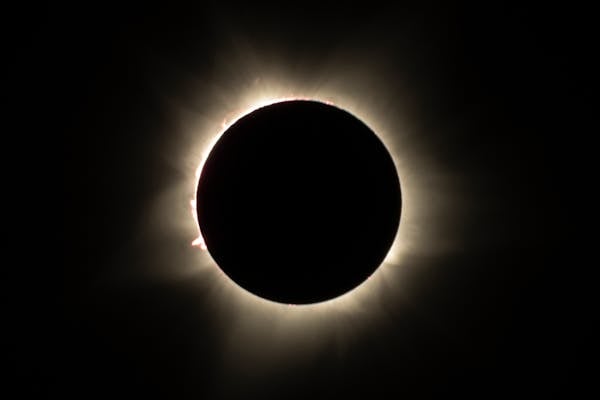
Prepare to be captivated by one of the most awe-inspiring celestial events of our lifetime! The Guide to the 2024 Total Solar Eclipse will ensure you’re fully equipped to experience this mesmerizing spectacle. On April 8, 2024, the moon will pass directly between the Earth and the Sun, casting a shadow that will traverse parts of North America, plunging regions into temporary twilight. Whether you’re a seasoned eclipse chaser or a curious first-timer, this guide will help you make the most of this extraordinary event.
What is a Total Solar Eclipse?
A total solar eclipse occurs when the moon completely covers the Sun, as viewed from Earth. This alignment causes the day to turn into night for a brief period, allowing the Sun’s corona, its outer atmosphere, to become visible. This rare phenomenon is an unforgettable experience, characterized by a sudden drop in temperature and a twilight-like darkness, even in the middle of the day.
Path of Totality
The Guide to the 2024 Total Solar Eclipse would be incomplete without detailing the path of totality. This path is the narrow strip of land where the total eclipse will be visible. The 2024 eclipse will travel diagonally across North America, starting in Mexico, moving through Texas, the Midwest, and up to the northeastern United States before crossing into Canada.
Key Locations Along the Path:
- Mazatlán, Mexico: This coastal city will be among the first to experience the eclipse.
- San Antonio, Texas: A major city providing numerous viewing spots.
- Little Rock, Arkansas: A central location with clear views.
- Indianapolis, Indiana: Expect large gatherings in this populous area.
- Cleveland, Ohio: Offers a mix of urban and natural viewing sites.
- Buffalo, New York: Near the end of the path, providing an excellent vantage point.
If you’re outside this path, you’ll still witness a partial eclipse, but nothing compares to the totality experience.
Best Viewing Practices
Experiencing the total solar eclipse safely requires some preparation. Here are essential tips:
Eye Protection
Never look directly at the Sun without proper eye protection, even during an eclipse. Specialized solar viewing glasses are a must. Regular sunglasses do not provide adequate protection. You can also use a solar filter for cameras and telescopes.
Viewing Equipment
While the eclipse is mesmerizing to the naked eye, using binoculars or a telescope with a solar filter can enhance your viewing experience. Photography enthusiasts should equip their cameras with solar filters to capture this rare event.
Timing
The total eclipse will last only a few minutes, but the partial phases before and after totality extend the experience to a few hours. Arrive early at your chosen viewing spot to settle in and avoid last-minute rushes.
Preparing for the Event
A little preparation goes a long way in ensuring a memorable eclipse experience. Here’s what you need to do:
Travel Plans
If you’re traveling to the path of totality, book your accommodations well in advance. Popular viewing spots will fill up quickly. Consider local traffic and plan to arrive at your viewing location early.
Weather Check
Weather conditions play a crucial role in eclipse visibility. Monitor forecasts leading up to the event. Having a backup location within driving distance can save the day if the weather turns unfavorable.
Local Events and Activities
Communities along the path of totality often host special events, educational talks, and viewing parties. Participating in these activities can enhance your overall experience and provide valuable insights.
The Science Behind the Eclipse
Understanding the science adds depth to the experience. Here’s a brief overview:
The Celestial Dance
The moon’s orbit around Earth is tilted relative to the Earth’s orbit around the Sun. This tilt causes solar eclipses to be rare events. During a total solar eclipse, the moon’s shadow, known as the umbra, sweeps across Earth’s surface, creating the path of totality.
Phases of the Eclipse
- Partial Eclipse Begins: The moon starts to cover the Sun.
- Total Eclipse Begins (Second Contact): The Sun is entirely obscured, and totality starts.
- Maximum Eclipse: The peak of the eclipse, with the Sun’s corona fully visible.
- Total Eclipse Ends (Third Contact): The moon starts to move away, and the Sun reappears.
- Partial Eclipse Ends: The moon completely moves away, and the eclipse concludes.
Impact on Nature
During a total solar eclipse, animals may behave as if night has fallen. Birds may roost, and nocturnal animals might emerge. This brief transformation of day into night is a fascinating aspect of the event.
Eclipse Myths and Legends
Eclipses have inspired awe and fear throughout history. Many cultures have myths and legends about these celestial events. From ancient Chinese dragons devouring the Sun to Hindu myths of the demon Rahu, eclipses have been woven into the fabric of cultural storytelling.
Why Witness the 2024 Eclipse?
The 2024 total solar eclipse is an extraordinary opportunity. It’s not just a scientific event but a profound natural spectacle. Witnessing the day turn into night, feeling the temperature drop, and seeing the Sun’s corona are experiences that words can’t fully capture.
Moreover, the next total solar eclipse visible from North America won’t occur until 2045. This makes the 2024 eclipse a must-see event for anyone fascinated by the wonders of the universe.
Conclusion
Mark your calendars, make your plans, and prepare to be amazed by the 2024 Total Solar Eclipse. Whether you’re a seasoned eclipse chaser or a first-time observer, this guide ensures you’re ready for an unforgettable experience. From understanding the path of totality to safe viewing practices and the science behind the phenomenon, you’re now equipped to enjoy this celestial event to the fullest.
Embrace the wonder, and enjoy the show!


